About Me
A Computer Scientist And A Cognitive Neuroscientist
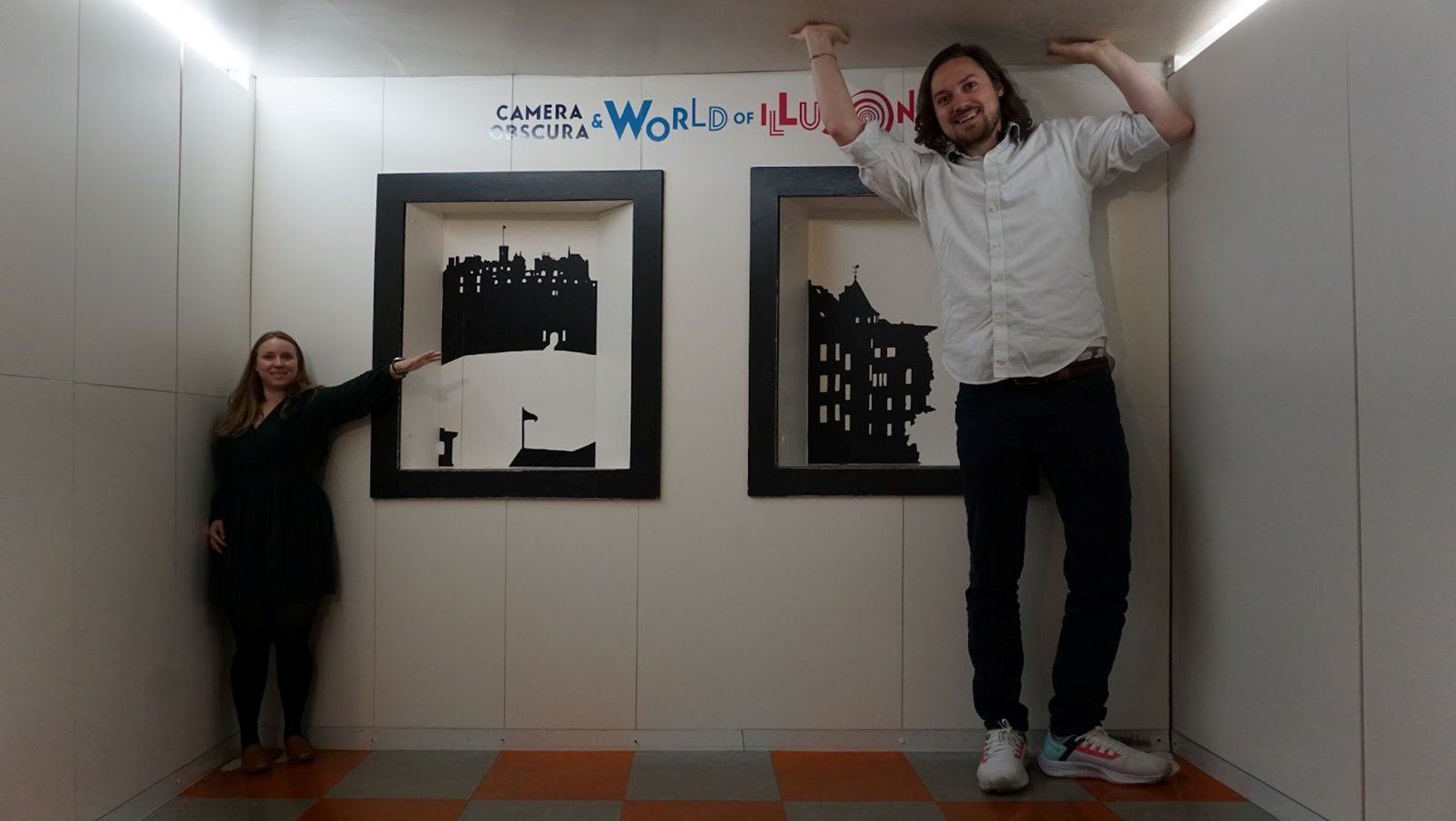
I started my career as a Unity3D programmer exploring virtual reality during my undergrad at the University of Mississippi. What began as building VR simulations quickly evolved into a deeper fascination: understanding how VR manipulates our perception of reality. Under Adam Jones—a computer scientist with formal cognitive science training—I learned to investigate visual perception through VR, marking an inflection point in my career toward cognitive neuroscience.
After completing my CS degree, I moved to Utah to work with renowned cognitive neuroscientists Sarah Creem-Regehr and Jeanine Stefanucci. Both have strong ties to computer science through their pioneering VR research. Through Sarah and Jeanine, I developed rigorous methodological skills rarely emphasized in traditional CS PhD programs. In August 2025, I also joined the SPACE Lab to apply my interdisciplinary expertise to experimental design and mentor junior programmers on VR/AR technical challenges.
I see myself as someone with the sound theoretical approaches of a cognitive neuroscientist combined with the technical expertise to implement those solutions. As the only CS PhD in the psychology-focused VAAST Lab, I bridge two worlds—translating between engineering constraints and experimental requirements, between what's theoretically ideal and what's technically feasible.
Laboratories and Communities
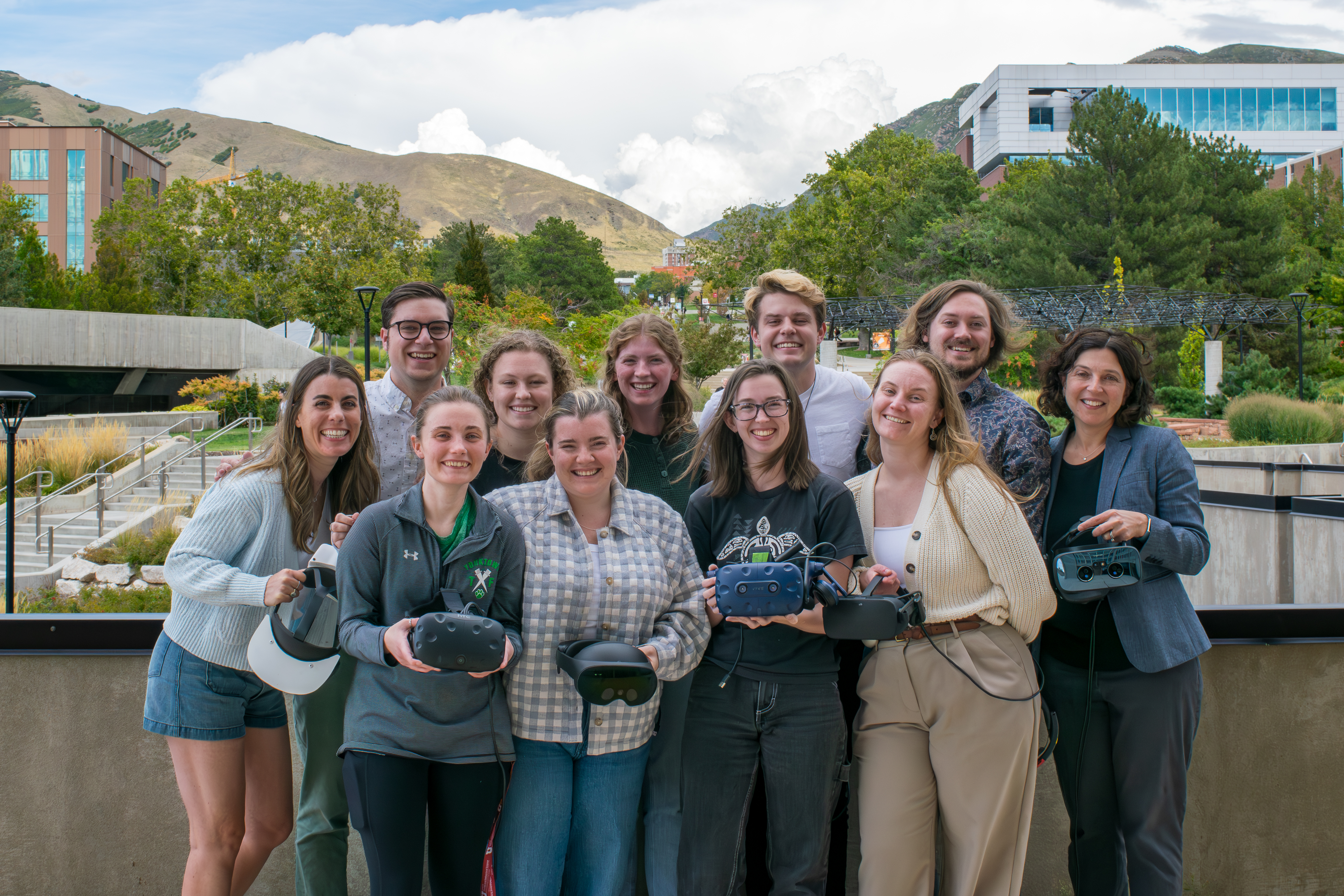
I am most associated with the Vision, Audition, Action in Space & Time (VAAST) Lab at the University of Utah. Sarah Creem-Regehr and Jeanine Stefanucci operate this lab in the cognitive neuroscience area of the Psychology Department. I am the only computer science PhD in the lab during my tenure there. The rest of the members are pursuing PhDs in cognitive neuroscience, with few exceptions for MD PhDs. Here, my colleagues and I focus on the human aspect of virtual reality and augmented reality. How can this technology enhance our experience of the world to make more accurate and faster choices than without? What particular implementations are the most advantageous? How is VR or AR sometimes more disadvantageous in certain scenarios? I also collaborate with researchers at Mississippi State in the High Fidelity Virtual Environments (Hi5) Lab, led by Adam Jones, Vanderbilt University with Bobby Bodenheimer, University of Utah's IO Trust Lab and Immersive NeuroModulation and Neuroimaging Lab, with Luis Garcia and Cory Inman respectively as heads. I often publish in communities such as IEEE VR, ACM SAP, IEEE ISMAR, IEEE TVCG, Psychonomic Society, and others as applicable to the research at the time.
Current Research Focus
Thinking Outside the Eyebox: Evaluation of Perceptual Effects from Pupil Swim Distortions in HMDs
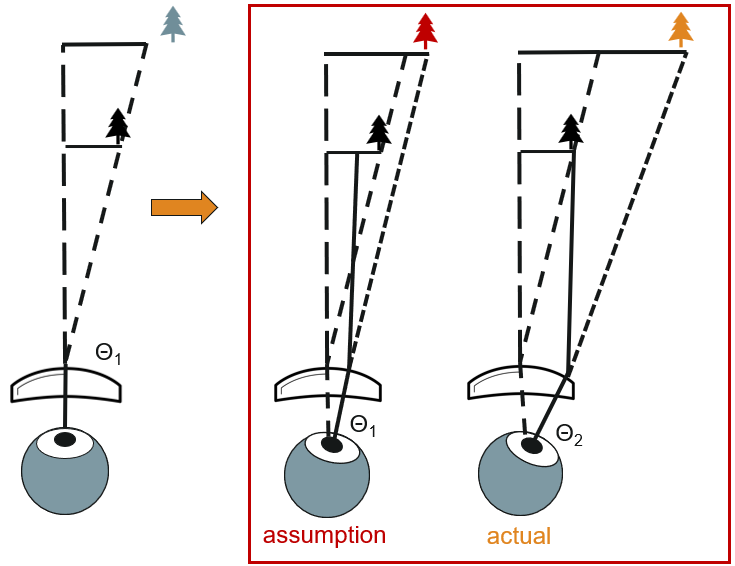
I am currently investigating the perceptual consequences of eye position in virtual reality, focusing on optical systems. Using a blend of computer vision, action-perception, and some intuition, I am evaluating pupil swim in various head-mounted displays spanning 20 years of virtual reality development. For a deeper dive, consider watching my talk below!
Featured Publication
Effect of Interpupillary Distance Mismatch on Distance and Orientation Perception in Action Space Across HMDs
Hunter C. Finney, Maggie K. McCracken, Eric Zhuo, Sarah H. Creem-Regehr, Jeanine K. Stefanucci — University of Utah
When a VR headset's lens spacing doesn't match a user's interpupillary distance (IPD), does it warp how far away things look? This paper investigates exactly that—comparing two headsets with different lens types (Fresnel vs. aspherical) and testing distance and orientation perception both straight ahead and in the periphery. Key finding: IPD mismatch affects distance more in the HTC Vive Pro (Fresnel), while orientation errors are greater in the Varjo XR-3 (aspherical)—and lens type, not resolution or FOV, is the primary driver.
Watch the full talk from IEEE VR 2026:
Atlas the Borzoi
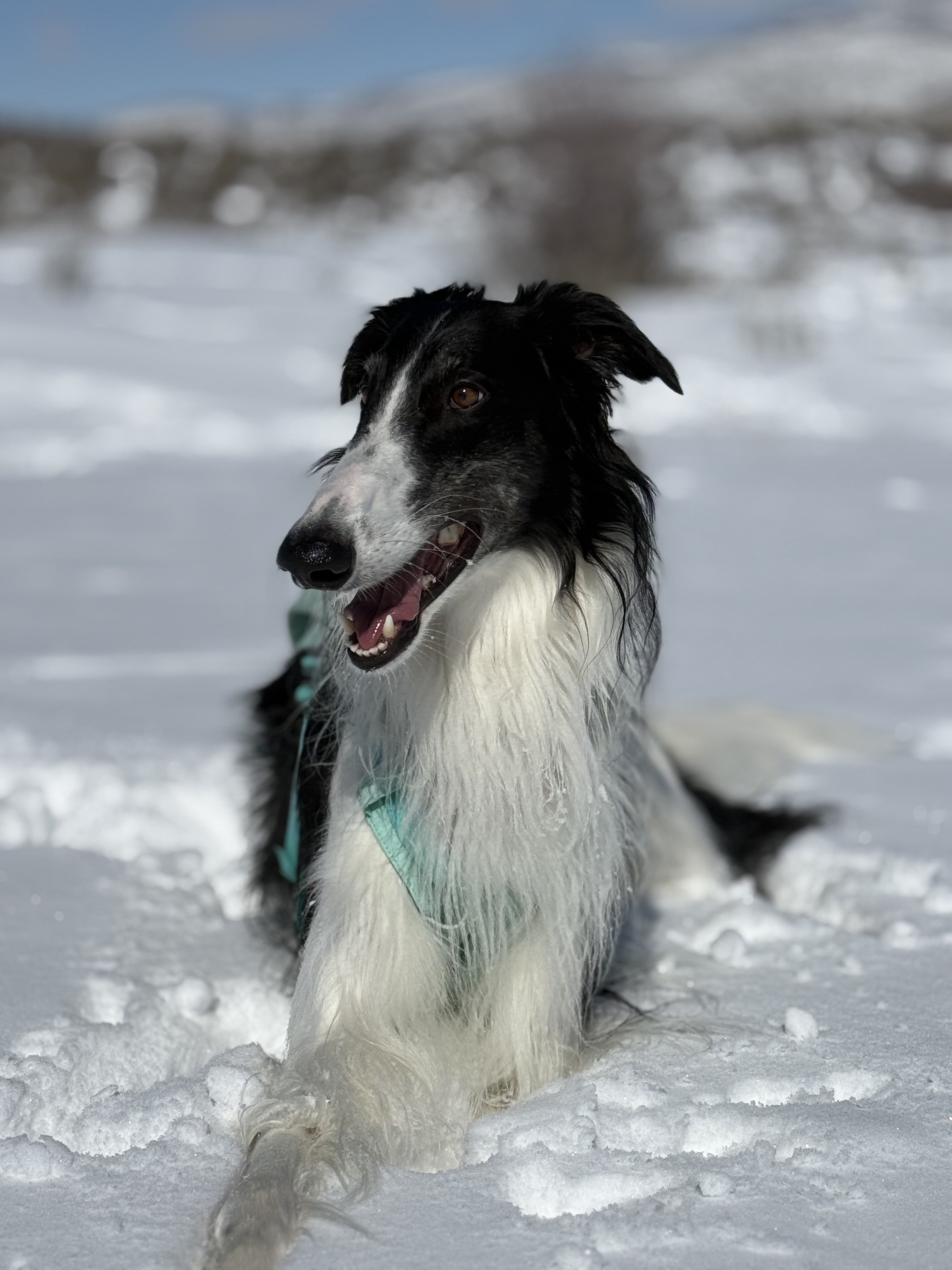
None of my work would be possible without the support of my best bud and officemate, Atlas. Atlas is my Borzoi—also known as a Russian Wolfhound. He oscillates from 2-dimensional floor decor to a 38mph 5-star recruit several times per day. Atlas is an incredibly intelligent and independent dog that spends as much effort untying knots and solving puzzles for rewards as he does keeping our squirrels from ever touching our lawn. Atlas also has a unique perspective of the world. Nearly 5000 years ago, sighthounds were discovered to be exceptional at hunting by sight, as the name suggests. It wasn't until relatively recently that sighthounds, like Borzois, have an entirely different photoreceptor density as compared to other breeds or humans. Humans have a fovea, a circular patch in the center of their vision, and objects appear to be the clearest. In contrast, Atlas has a visual streak. A thin horizontal line across their entire field of view allows visual clarity spanning the 270 degrees of their vision. Imagining how Atlas views the world compared to our 2-degree fovea and 180-degree vision reminds me that no matter the optics of a situation, anyone could be seeing it from a different perspective.